Loading...
Please wait while we prepare your content
Please wait while we prepare your content
Discover how ENVSOL Technologies is engaging with the African innovation ecosystem to transform biobased ideas into investable solutions.
From Biobased Ideas to Investable Solutions
28 July – 7 August 2025
Nairobi, Kenya & Arusha, Tanzania
20 early-career scientists from 10 African countries
Making Ideas Investable
The BioInnovate Africa Biobased Innovation & Entrepreneurship Bootcamp 2025 was an intensive regional programme designed to help African scientists and innovators transform promising biobased ideas into commercially viable and investable solutions. The programme created a unique platform where science, entrepreneurship, business development and investment came together. For Abraham Erodi and Baker Kansiime, participation in the Bootcamp represented an important step in the development of their innovation journey and the broader vision of ENVSOL Technologies Uganda Ltd. It provided an opportunity to interact with scientists, entrepreneurs, investors, policymakers, industry actors and fellow innovators from across Africa.
Abraham Erodi & Baker Kansiime
Innovators, ENVSOL Technologies Uganda Ltd
Represented ENVSOL at the inaugural BioInnovate Africa Bootcamp, gaining skills, networks, and confidence to transition from ideas to enterprises.
Comprehensive training covering customer discovery, value propositions, financial planning, intellectual property, and investor engagement.
Practical exposure to the innovation ecosystem through visits to EAC, A-Z Group, and NM-AIST Incubation Center for Research.
Engagement with Prof. Nicholas Njau Karoli, providing technical and strategic insight on sustainable technologies and innovation development.
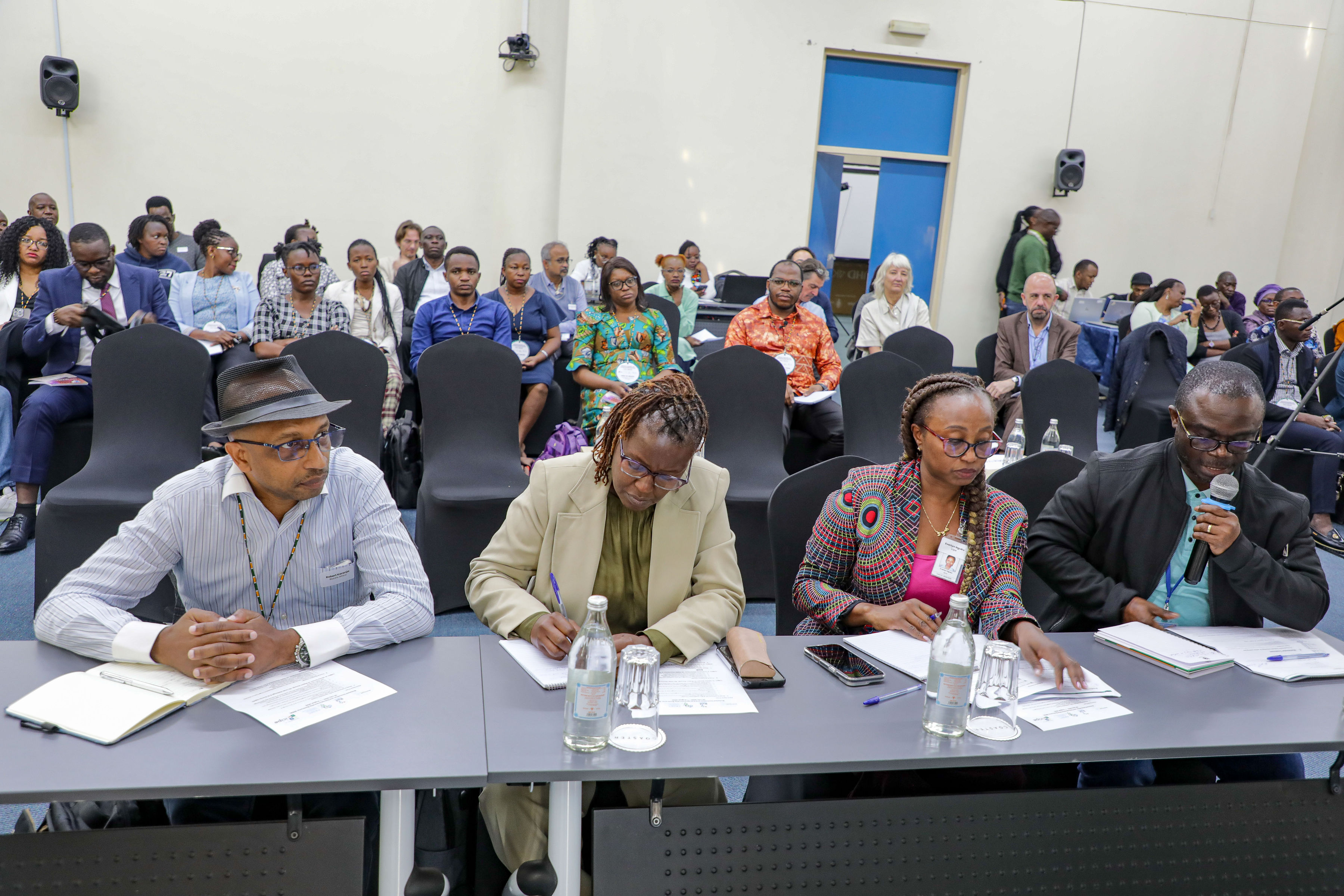
Presentation of refined innovations before investors, experts, and private-sector representatives in Nairobi, Kenya.
Regional integration and policy institution supporting economic development, trade, and cross-border collaboration.
Successful African business enterprise demonstrating manufacturing capacity, product development, and market orientation.
Institutional environment connecting research, innovation, technology development, and commercialization.
20 early-career scientists and innovators from 10 African countries came together to transform biobased ideas into investable solutions.
Immersive field engagements in Arusha, Tanzania, visiting the East African Community, A-Z Group, and NM-AIST Incubation Center.
Interactive session with Professor Nicholas Njau Karoli, gaining insights on waste-to-energy, anaerobic digestion, and sustainable technologies.
Successful pitch leading to BioVenture fellowship support for project implementation and continued mentorship.
The Bootcamp showcased the wide range of opportunities within Africa's growing bioeconomy. Participants developed and refined ideas across several thematic areas, including biopesticides, biomaterials, biopharmaceuticals, food and nutrition, biodiversity and biomimicry, and wastewater treatment systems. For Abraham Erodi and Baker Kansiime, the programme provided an opportunity to position their innovations within this broader African innovation ecosystem and to examine how scientific and technology-driven ideas can be transformed into solutions that respond to real market needs.
One of the most valuable aspects of the BioInnovate Africa experience was that the programme did not remain confined to classroom-based training. The participants were exposed to actual institutions, enterprises, researchers, innovation centres and regional organisations whose activities demonstrated different aspects of the African innovation ecosystem. The field engagements were particularly important because they allowed the innovators to see how research, entrepreneurship, industry, policy, technology development and commercialization interact in practice. For the ENVSOL team, these engagements provided an opportunity to understand the broader pathway from scientific discovery to a viable enterprise and to appreciate the importance of strategic partnerships in developing and scaling African innovations.
A key component of the Bootcamp was the field visit to Arusha, Tanzania, which provided participants with practical exposure to the innovation ecosystem beyond the classroom. The field experience allowed the innovators to interact with organisations operating at the intersection of research, industry, entrepreneurship and policy. Participants gained first-hand insights into how scientific knowledge and innovation can be connected to industry and commercial opportunities. The Arusha visit was particularly valuable because it demonstrated that successful innovation is not developed in isolation. Building an investable solution requires engagement with customers, businesses, researchers, policymakers, investors and other stakeholders across the innovation ecosystem. For the ENVSOL team, the field visit provided Abraham Erodi and Baker Kansiime with an opportunity to broaden their perspective, test their assumptions and understand the practical pathways required to move their ideas from concept development towards implementation and commercialisation.
One of the important institutional engagements during the Arusha field visit was the visit to the East African Community (EAC). The visit provided participants with an opportunity to appreciate the role of regional integration and policy institutions in supporting economic development, trade, innovation and cross-border collaboration within East Africa. For the innovators, the engagement was particularly relevant because the development and commercialization of science-based technologies cannot be considered only from a national perspective. Products and services developed through innovation have the potential to serve markets across the East African region, making regional standards, policies, trade frameworks, partnerships and market access important considerations. The visit therefore broadened the understanding of how innovation can move beyond the laboratory and individual enterprises into the wider regional economic system. For ENVSOL Technologies Uganda Ltd, this was an important lesson in considering the East African market as a potential platform for scaling locally developed technologies and services. The engagement also reinforced the importance of understanding the policy and institutional environment within which innovative businesses operate.
The field programme also included a visit to A-Z Group in Arusha, Tanzania, providing participants with direct exposure to a successful African business and industrial enterprise. The engagement was particularly valuable because it demonstrated how locally and regionally relevant ideas can be translated into practical products, businesses and employment opportunities. The visit allowed the innovators to appreciate the importance of manufacturing capacity, product development, quality management, market orientation, operational systems and business growth in converting ideas into sustainable enterprises. For Abraham and Baker, the experience provided a practical perspective on what it takes to progress beyond developing an innovation towards building an organisation capable of producing, delivering and commercialising solutions at scale. The visit also highlighted the importance of establishing connections between researchers and private-sector enterprises. Scientific innovations require pathways through which technologies can be developed, tested, manufactured, distributed and ultimately adopted by customers.
Another significant part of the journey was the opportunity to meet and interact with Professor Nicholas Njau Karoli, whose expertise and experience in research, innovation and technology development provided an important source of technical and strategic insight. The engagement was particularly meaningful for Abraham because of the alignment between his scientific interests and the broader areas of waste-to-energy, anaerobic digestion, wastewater treatment, resource recovery and sustainable technologies. The interaction with Prof. Njau provided an opportunity to discuss research ideas, innovation development and the practical challenges involved in taking scientific solutions towards implementation. The engagement also demonstrated the value of mentorship and collaboration between experienced researchers and emerging innovators. For Abraham and the ENVSOL team, the meeting reinforced the understanding that successful innovation requires not only a good scientific idea, but also access to technical expertise, mentorship, networks, partnerships and opportunities for application and commercialization. The relationship established through this interaction would also become important in the subsequent development of ENVSOL Technologies Uganda Ltd and its continued engagement with research and innovation activities in the region.
An additional and highly significant engagement during the journey was the visit to the Nelson Mandela African Institution of Science and Technology (NM-AIST) Incubation Center for Research in Tanzania. The visit provided the innovators with exposure to an institutional environment where research, innovation, technology development, entrepreneurship and commercialization are brought closer together. The Incubation Center offered an important perspective on how research outputs can be supported beyond the academic environment and progressively developed towards practical applications. For the ENVSOL team, this engagement was especially relevant because the organisation's vision is built around transforming scientific knowledge into practical technologies and services that address real environmental and energy challenges. The visit provided an opportunity to appreciate the role of research incubation in: • nurturing innovative scientific ideas; • supporting technology development; • connecting researchers with industry; • facilitating entrepreneurship; • strengthening innovation networks; • supporting commercialization of research outputs; and • creating pathways for research to generate wider economic and social impact.
Taken together, the engagements in Arusha—including the East African Community, A-Z Group, interaction with Prof. Nicholas Njau Karoli and the NM-AIST Incubation Center for Research—provided a much broader understanding of the innovation ecosystem than could have been achieved through classroom training alone. The field visit demonstrated that innovation operates across several interconnected levels: Research → Technology Development → Incubation → Enterprise Development → Industry → Markets → Policy → Regional Scale-up The experience helped the innovators appreciate that developing an investable solution requires more than scientific excellence. It requires a clear understanding of customers, markets, regulations, financing, partnerships, manufacturing, intellectual property, business models and routes to commercialization. For ENVSOL Technologies Uganda Ltd, the Arusha experience was therefore not simply a field trip. It was an opportunity to understand the ecosystem within which the company's future technologies and services could be developed and scaled.
The Bootcamp culminated in a final pitch event in Nairobi, Kenya, where participants had the opportunity to present their refined innovations before a panel comprising experts, investors, scientists, private-sector representatives, development partners and other actors within the innovation ecosystem. For Abraham and Baker, this was the defining moment of the Bootcamp journey. After days of refining their ideas, understanding their customers, strengthening their value propositions and developing their business cases, they stepped forward to pitch their innovations and demonstrate their potential for real-world impact and investment. The pitch event transformed the Bootcamp experience from a learning exercise into an opportunity to sell the vision behind their innovations—communicating not only what their solutions could do, but also why they mattered, who would benefit, how they could be implemented and why they represented viable opportunities for further investment and growth. The experience challenged the innovators to communicate scientific and technical concepts in a manner that could be understood by investors and other non-technical stakeholders. This was an important lesson for ENVSOL because successful commercialization requires innovators to bridge the gap between technical science and business value.
The successful pitch marked an important milestone for Abraham Erodi and Baker Kansiime. Their innovations progressed beyond the idea stage and secured support through the BioVenture pathway, providing an opportunity for further mentorship, venture development and implementation of their projects. BioInnovate Africa's BioVenture Hub is designed to support promising science-based ventures through continued expert guidance and exposure to investors, helping innovators advance their solutions towards commercialisation. For ENVSOL Technologies Uganda Ltd, this achievement represents more than participation in an international innovation programme. It demonstrates the organisation's commitment to turning locally developed scientific and technological ideas into practical solutions with the potential to generate economic, environmental and social impact. The BioInnovate Africa Bootcamp therefore became an important chapter in ENVSOL's innovation journey—equipping its innovators with the skills, networks and confidence to transition from: Ideas to enterprises. Research to products. Innovation to impact.
Looking back at the entire experience, the BioInnovate Africa journey was much more than a conventional entrepreneurship training programme. It began with intensive learning and interaction among African scientists and innovators in Nairobi. It expanded through practical exposure to institutions and businesses in Arusha. It provided opportunities to interact with regional policy institutions such as the East African Community, private-sector enterprises such as A-Z Group, experienced researchers such as Prof. Nicholas Njau Karoli, and research and innovation infrastructure such as the NM-AIST Incubation Center for Research. The journey then returned to Nairobi for the final investor pitch. Each stage contributed a different dimension to the innovators' understanding of how ideas become investable solutions. The classroom sessions provided the entrepreneurial tools. The field visits provided real-world exposure. The research and academic engagements provided technical and scientific perspective. The private-sector engagements provided commercial insight. The regional institutional engagement provided policy and market perspective. The final pitch provided the investment challenge. Together, these experiences created a comprehensive learning journey from science to innovation, innovation to enterprise, and enterprise towards impact.
The experience of Abraham Erodi and Baker Kansiime reflects ENVSOL Technologies Uganda Ltd's broader vision of supporting innovative solutions that address Africa's pressing challenges. The BioInnovate Africa Bootcamp demonstrated the importance of connecting science, entrepreneurship, industry, policy and investment. It also showed that Africa's innovators have the potential to develop home-grown solutions capable of addressing local challenges while creating opportunities for sustainable businesses, employment and economic growth. The journey demonstrated that Africa does not merely need to consume technologies developed elsewhere. There is a significant opportunity for African researchers and entrepreneurs to develop technologies that are locally relevant, scientifically sound, commercially viable and capable of scaling across the continent.
The BioInnovate Africa experience ultimately became a foundation for the continued development of ENVSOL Technologies Uganda Ltd. It strengthened the innovators' ability to look at scientific challenges not only as research questions but also as opportunities for enterprise development and societal impact. The experience also established important networks that could support future research collaborations, technical mentorship, technology development, commercialization and regional expansion. Most importantly, it changed the perspective of what it means to be a scientist and innovator. A successful scientist does not necessarily stop at publishing research. A successful innovation does not necessarily stop at proof of concept. A successful entrepreneur does not necessarily begin with a conventional business idea. The BioInnovate Africa journey demonstrated that these pathways can be connected: Scientific discovery can become innovation. Innovation can become technology. Technology can become a product or service. A product or service can become a business. And a business can become a vehicle for environmental, social and economic impact. This is the philosophy that continues to guide the development of ENVSOL Technologies Uganda Ltd.
The BioInnovate Africa journey connected research, innovation, and enterprise development.
Intensive training on entrepreneurship, customer discovery, financial planning, and investor engagement.
Practical exposure to the innovation ecosystem through visits to EAC, A-Z Group, and NM-AIST Incubation Center.
Interaction with Prof. Nicholas Njau Karoli and engagement with regional integration institutions.
Successful pitching before investors and experts, securing BioVenture fellowship support for project implementation.
The BioInnovate Africa Biobased Innovation & Entrepreneurship Bootcamp 2025 was a defining experience in the innovation journey of Abraham Erodi, Baker Kansiime and ENVSOL Technologies Uganda Ltd. From the intensive learning sessions in Nairobi, through the rich field engagements in Arusha—including the East African Community, A-Z Group, interaction with Prof. Nicholas Njau Karoli and the NM-AIST Incubation Center for Research—and back to Nairobi for the final investor pitch, the programme provided a complete and practical exposure to the African innovation ecosystem. The journey demonstrated that transforming a scientific idea into an investable solution requires a combination of science, creativity, entrepreneurship, mentorship, partnerships, policy awareness, market understanding and investment readiness. For ENVSOL Technologies Uganda Ltd, the experience provided not only knowledge but also relationships, confidence and a clearer pathway towards commercialization. The company is proud to have been part of this transformative journey and remains committed to advancing technologies that convert Africa's environmental and resource challenges into opportunities for innovation, sustainable enterprise development and lasting impact. From biobased ideas to investable solutions. From research to innovation. From innovation to enterprise. From enterprise to impact.